
- Permit #951TDEC septic tank pumper permit, Hawkins County
- 5.0 on HomeAdvisorfrom 12 customer reviews
- 5.0 on Google“very honest and professional”
- Homes & businessesResidential and commercial septic service
In their own words
“Dedicated to excellence in customer care.”
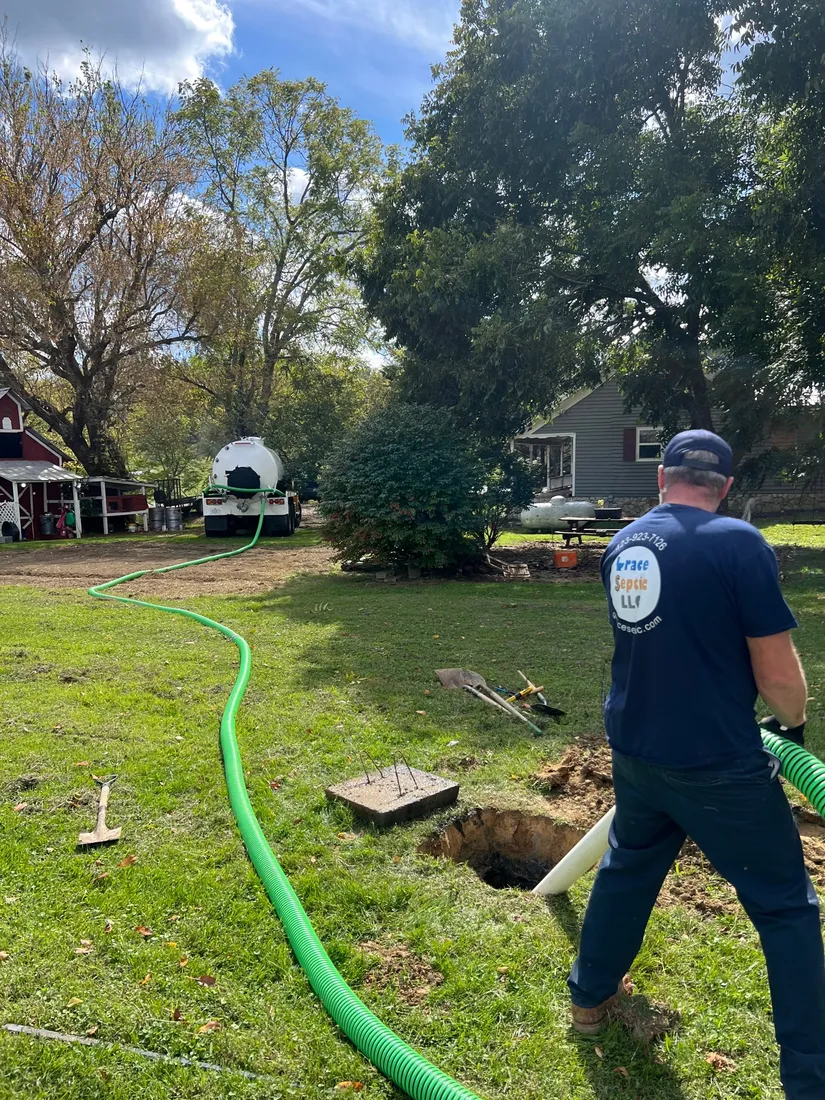
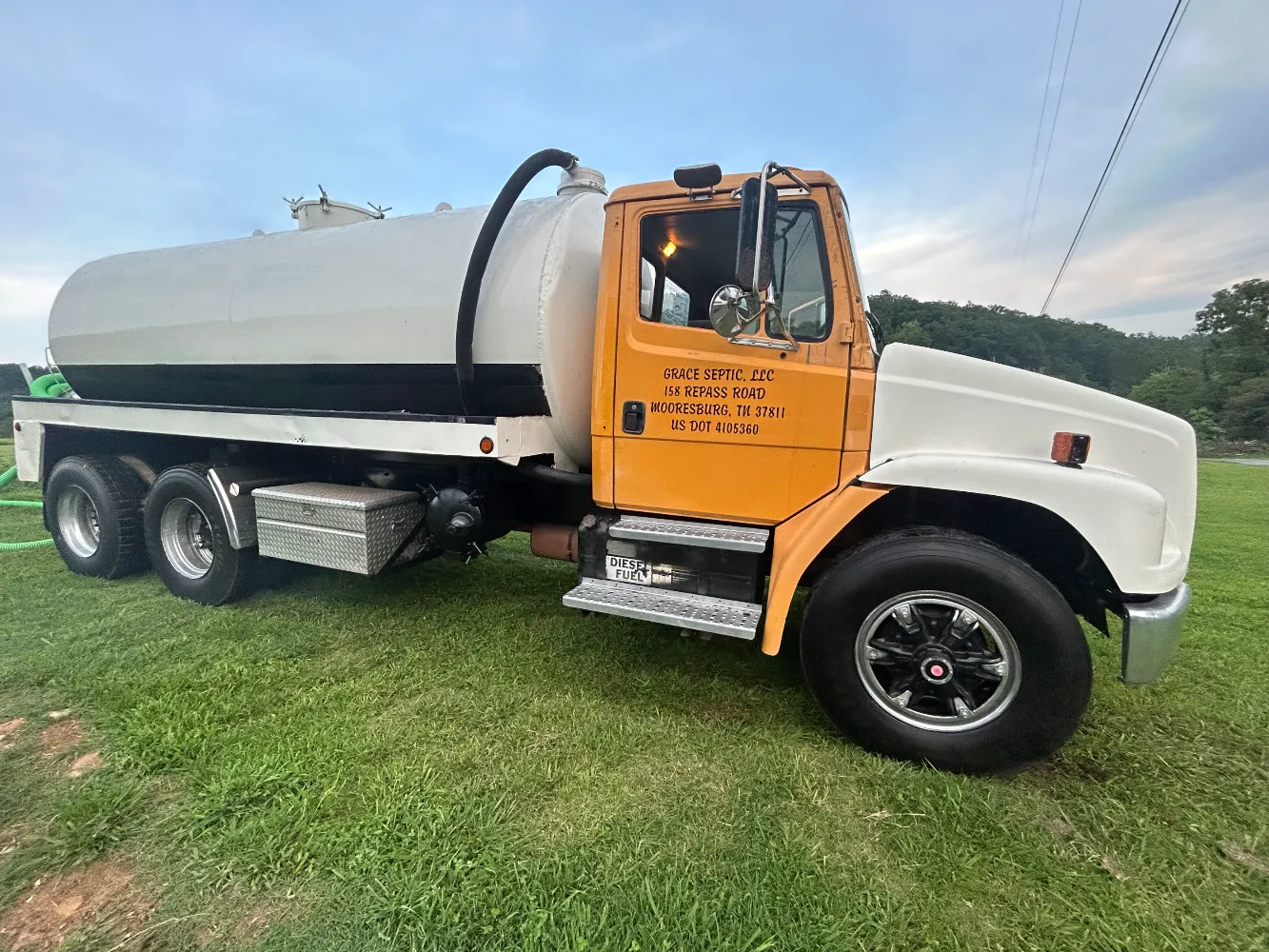
Grace Septic is a locally-owned and operated family business located in Mooresburg, Tennessee. The company pumps and maintains septic systems for both residential and commercial property owners, and its stated goal is simple: septic service at an affordable price with no hassle to you.
It holds Tennessee septic tank pumper permit #951 from TDEC, listed under Hawkins County, and customers on Google and HomeAdvisor give it five stars.
About Grace SepticWhat we do
Septic work, from the clean-out to the grease trap.
- 01Septic tank pumpingFull pump-outs for homes, farms and rentals, with a look at the tank while it’s open.
- 02Septic maintenanceRegular service on a schedule that fits your household and your tank.
- 03Septic repairFinding why the system is backing up or slow, and fixing what we find.
- 04Exterior clean-outsSnaking the clean-out between the house and the tank to clear the line.
- 05Grease trap pumpingPumping and cleaning restaurant and kitchen grease traps.
- 06Commercial septic serviceSeptic pumping and service for businesses, churches and properties with bigger systems.
How it works
What’s under your yard.
Most septic trouble starts in one of three places. Knowing which is half the fix.
- 1
The line & clean-out
Everything leaves the house through one pipe. The clean-out is where we snake it when it clogs.
- 2
The tank
Solids sink as sludge, grease floats as scum, and the clearer water moves on. Pumping removes what bacteria can’t break down.
- 3
The drain field
Perforated pipe in gravel lets the water soak into the soil, which does the final cleaning, here often thin clay over limestone.
A pump-out, step by step
What happens when we come out.
No mystery and no hassle. If you know roughly where the lids are, tell us when you call.
(423) 923-7126- 1
Call
Tell us the town, the problem and anything you know about where the tank and lids are.
- 2
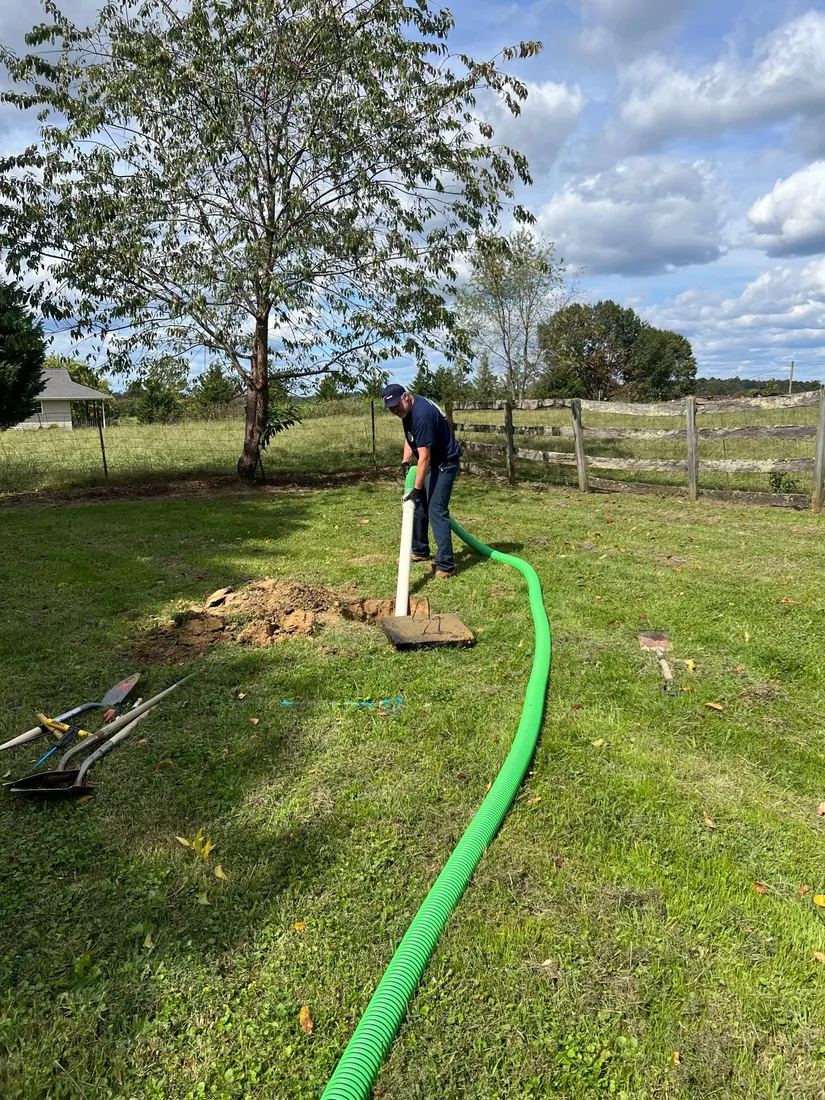
Find the lids
We locate and uncover the tank lids. Risers make the next visit quicker.
- 3
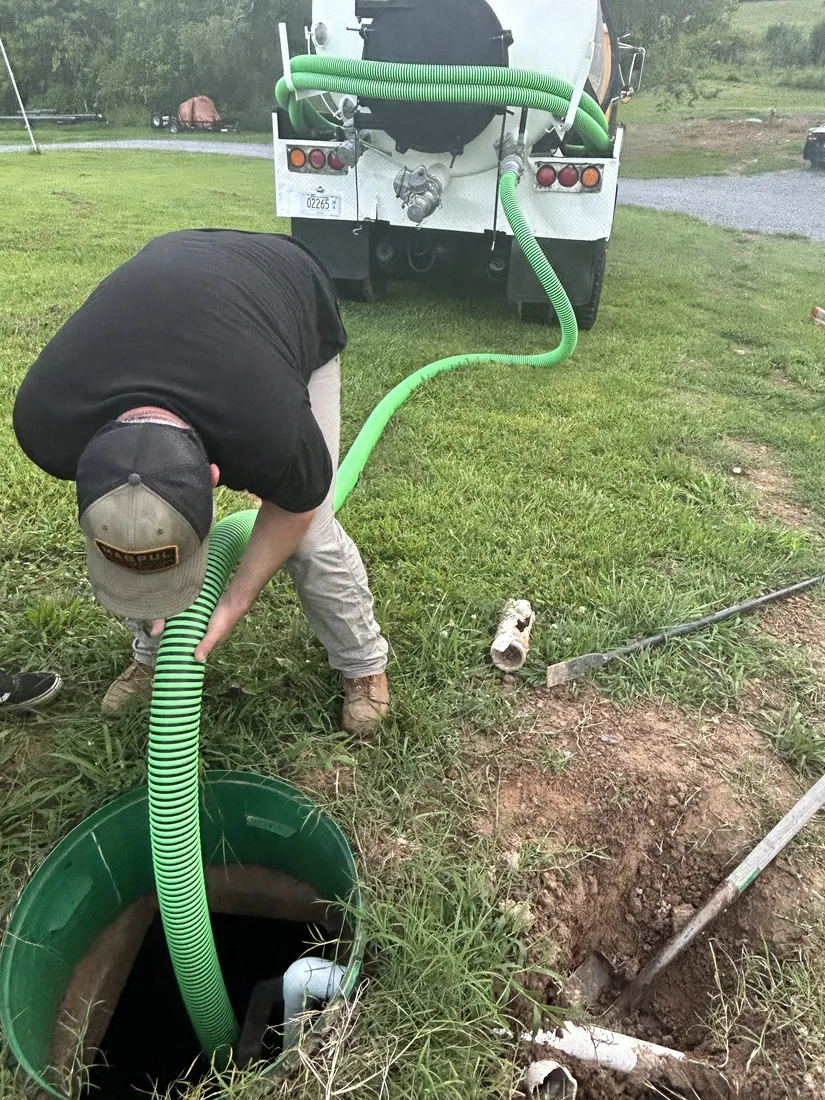
Pump it out
Sludge and scum come out of every compartment into the truck.
- 4
Look while it’s open
We check the water level, the inlet and outlet and the tank’s condition.
- 5
Close it up
Lids go back on secure, and we tell you what we saw and when to pump again.
When to call
Six signs your septic system wants attention.
Slow drains everywhere
When every sink, tub and toilet slows at once, the problem is usually past the house: the line, the tank or the field.
Gurgling pipes
Air bubbling back through a drain after you flush often means the line or tank is getting full.
Sewage odor outside
A septic smell over the tank or the field, especially after rain, is worth a call.
Wet, green stripes
Soggy ground or grass that stays greener over the drain field can mean the field is overloaded.
Backup in the lowest drain
A basement shower or floor drain is usually first. Stop using water and call.
Years since the last pump-out
If you can’t remember when the tank was last pumped, it’s probably due.
Never enter a septic tank or lean into an open one. Septic gases and low oxygen can kill in minutes, rescuers included. Keep lids secure and children and pets away. Sewage in the house? Stop using water, keep everyone out of the area, and call.
What customers say
Honest, professional, and nice about it.
Google reviews, quoted word for word. On HomeAdvisor, Grace Septic holds a 5.0 from 12 reviews.
“They came out and pumped my septic, very honest and professional. Give him a call you won't be disappointed!”
“They came out and pumped my septic tank. They were really nice and efficient! I was really happy with my experience.”
“My first call for any septic issues, always! THANK YOU!”
Summary of a reviewA septic-pumping customer wrote that they were pleased with the Christian values and the professionalism of the job, and with how promptly the work was done.
Local knowledge
Ridge, valley and lake: the ground decides a lot.
The Holston valley is Valley and Ridge country. Long ridges of shale and sandstone run southwest to northeast, with limestone valleys between them, and Cherokee Lake now fills the river’s old bottomland. Soil can be deep red clay in one field and a few inches over rock in the next.
That matters for a drain field, which needs enough soil to clean the water before it reaches the cracked limestone below. It also matters for permits: Hawkins County goes to one TDEC office, Hamblen and Grainger to another.
Valley ground & lake questions- Hawkins County
- TDEC, Johnson City field office
- Hamblen County
- TDEC, Knoxville field office
- Grainger County
- TDEC, Knoxville field office
- Jefferson County
- Contract county: the county runs its own program
Where we work
Mooresburg and the lake towns around it.
Hawkins, Hamblen and Grainger counties, from Rogersville to Morristown.
- MooresburgHawkins County
- RogersvilleHawkins County
- Bulls GapHawkins County
- MorristownHamblen County
- Bean StationGrainger County
Straight answers
Septic questions, answered.
How often should a septic tank be pumped in East Tennessee?
Most household septic tanks need pumping every three to five years. A smaller tank, a bigger household, a garbage disposal or a lot of laundry pushes that toward the short end.
What are the signs a septic system is failing?
Slow drains all over the house, gurgling pipes, sewage smell outside, wet or extra-green ground over the drain field, and sewage backing up into the lowest drain.
Who permits septic systems in Hawkins, Hamblen and Grainger counties?
The Tennessee Department of Environment and Conservation (TDEC), Division of Water Resources. Hawkins County is handled by TDEC’s Johnson City field office; Hamblen and Grainger counties by the Knoxville field office.
Why is septic harder in the Holston valley than in some places?
Because the ground here is the Valley and Ridge: long parallel ridges and valleys of folded limestone, dolomite and shale. Soils are often shallow over rock, rocky or cherty, or tight red clay, and the limestone underneath is full of cracks, sinkholes and springs.
How often does a restaurant grease trap need pumping?
It depends on the size of the trap and how much grease the kitchen produces. A common rule is to pump it before the grease and solids fill a quarter of its depth; for many busy kitchens that means every one to three months.